Headlamp Pictures Blog

Independent Film, PBS and the challenges of distributing media today.

Seltzer Works | POV | PBS Video

without comments

A beautiful way to spend 6 minutes… thank you Jessica Edwards and POV.

Written by colin

September 3rd, 2010 at 11:01 pm

Posted in Uncategorized

Summer fun! Every surf video trope known to man!

without comments

Written by colin

August 27th, 2010 at 9:32 am

Posted in Uncategorized

Filmmakers can use ripped DVD footage without getting busted for “piracy”

without comments

Some USC law students have won a major concession from the US Copyright Office on how documentarians (isn’t there a better word?) may use material from copyrighted works. In particular, it allows that material from DVD’s (protected by the DMCA) may be used in manners consistent with Fair Use and that filmmakers not be prosecuted for pirating the ripped material.

Obviously, if you’re venturing far into these realms, you need to understand your rights of Fair Use and should still consult an attorney before distributing your work. (More on Fair Use below.) But the great news is that relatively attractive footage can be obtained for free or little money… where previously either low grade (VHS) or expensive (studio masters) where required. Here’s an excerpt from the USC bulletin announcing the success:

USC Intellectual Property & Technology Law Clinic Wins Copyright Exemption for Filmmakers

Monday, Jul 26, 2010

 Documentary filmmakers now allowed to use material  

-Gilien Silsby

A team of USC Law students from the USC Intellectual Property and Technology Clinic has helped secure an exemption that will allow documentary filmmakers to use material contained on DVDs and other sources that were previously off limits.

The exemption to the Digital Millennium Copyright Act (DMCA) was announced today by the United States Copyright Office. The Digital Millennium Copyright Act of 1998 makes it a crime to break the digital locks on DVDs and other media. The restriction prevented filmmakers from making fair use of material, or using public domain material.

To really get a handle on what Fair Use is and the legacy of legal decisions that support the concept the best source that I’ve ever found remains the Center for Social Media. Check it out then go make a great mashed-up commentary!

Written by colin

August 5th, 2010 at 10:44 pm

Posted in Uncategorized

Jeb Corliss the flying man

without comments

I had seen some brief videos of base jumpers and their wingsuits, but today saw an editor’s reel that featured this “wingnut”.

Corliss is pretty wild – his dream is to land from a free fall without a parachute. He wants to build a giant landing ramp that he would slide down stomach first (at 110 mph or so) to come to an eventual halt.

In the meantime, he keeps practicing ever more extreme flights to refine his control while flying the wingsuit.

In his most recent video he decides to get a close up look at Switzerland’s geology:

Written by colin

July 26th, 2010 at 5:43 pm

Skating – Harley’s – Customizing – The NYT needs a little Jason Jesse!

without comments

The NYT just put up an article about skaters and motorcycles… it promised something about a “cafe racer CB350″, but never delivered… stayed locked into idolizing 70’s Harley’s… boring! Problem is, if you’re going to cover Harley’s & skating you better not miss Jason, but the newspaper of record did. But still I liked this quote from the article:

The design theme skateboarders often strive for is distinct from “rat bikes,” a breed that fetishizes matte finishes over glossy paint and rust over chrome. There is a “Road Warrior” quality to many skaters’ bikes. Mr. Eusey’s Harley, for example, has a hatchet bolted to the frame (handy when camping out) and foot pegs made from railroad spikes.

Here’s a little video clip about the guys in Indiana featured in the story…

Full article is here

Written by colin

July 20th, 2010 at 8:08 am

Posted in Uncategorized

Joe Berlinger’s case yields preliminary “wins” for both sides

without comments

Both sides have claimed early victories in the case of documentarian Joe Berlinger vs. Chevron over access to the raw footage he shot for his expose “Crude” on Amazonian oil exploitation. I’ve blogged about the case and the filmmaking community reaction here.


On Thursday, the appeals judge ruled that Berlinger must turn over Crude footage that does not appear in any public version of the film’s release if it shows the counsel for the plaintiffs in the Lago Agrio class action lawsuit against Chevron or any experts or Ecuadorian government officials involved in that case.

This is bad news for the plaintiffs in that case, and likely good news for Chevron. Thankfully, the court also found that Chevron had to use the footage strictly for legal defense purposes and could not use if for marketing or other PR purposes. But whether this decision means that filmmakers can rest assured that their footage is safe from similar “takings” is still pretty unclear.


As for the case’s potential use as precedence on non-confidential information and journalist’s privilege in the future, Floyd Abrams, the famed First Amendment lawyer representing the media amici, cautioned that a ruling alone is not enough grounds to gauge its future applications. “We have to wait for the opinion of the court to see how they applied the law,” Abrams said. “It’s too early to tell where we’re going in this area.”

Berlinger himself seems both confident that the court will ultimately uphold the narrowing of the original request and the difficulty of any court appeal to prevail:


Most appeals are unsuccessful and the appealing party has a lot to prove. I was very relieved the court seemed to be sympathetic to my primary concerns about the case. Nobody expects the decision to be completely reversed. Having covered the legal process, I know there are times you want journalists to be compelled. But it can’t just be a fishing expedition. If I knew I had any evidence that was exculpatory, I would want the footage to be turned over. But only if the First Amendment standards of true relevancy and exclusive access of information are met.

Written by colin

July 17th, 2010 at 4:53 pm

Posted in Uncategorized

Appeals Court Hammers the FCC on inconsistent indecency rulings

without comments

Appeals Court Hammers the FCC on inconsistent indecency rulings

July 16th, 2010 · Future of public media, PBS, Public Affairs, Public Media ·Edit

Today the States Court of Appeals for the Second Circuit issued a decision that found the the FCC’s 2006 decision to punish broadcasters for Cher and Nicole Richie’s “fleeting expletives” was based on vague and inconsistent standards. It is likely that this decision and possibly the upcoming decision on Janet Jackson’s “wardrobe malfunction” in the 3rd Circuit Court of Appeals will be appealed to the Supreme Court for decision in the next several years.

The good news is that this decision included a strongly worded rebuke on the FCC’s inconsistency regarding rulings about the same expletives that were allowed in Saving Private Ryan, but disallowed in the documentary The Blues – Godfathers and Sons. This might mean a pause in new findings by the FCC while these decisions are appealed. Meanwhile, broadcasters like Mountain Lake PBS are still likely to err on the side of caution and flag and/or censor expletives and visual materials before airing them. Regardless of the court decisions, Mountain Lake PBS will always be careful to evaluate all the programs that we air, provide viewer discretion warnings when appropriate and move questionable content into late evening slots.

ShareThis

Tags: ·····

Written by colin

July 16th, 2010 at 2:56 pm

Posted in Uncategorized

More Free Web Tools for Everyone

without comments

This follows from my earlier post about the Ben Franklin Project… use these to save money!

Tools

There are tons of free and good tools online to help public broadcasters (and others) accomplish essential online media tasks such as creating and posting image, audio and video files, having audience share content with one another, and so on. Below are some of the free and easy tools that I have accumulated so far. Please add yours to the list and together we can build an impressive online tool kit for public media.

#0: CMS (Content Management System)

#1: Screen capture as image, video or narrated slide show
These tools record your action on computer screen (whole or part of the screen) and narration. So they’re perfect for creating demo video, narrated slide shows, and illustrated stories.

  • Screenr: can send screen capture video to mobile, too
  • ScreenToaster: can add subtitle and capture webcam images
  • Jing: can’t record webcam

#2: Sharing and collaboration

#3: Image, audio and video editor

#4: Web traffic measurement

#5: Website design

#6: Data mining and visualization

#7: Other useful tools

  • TagCrowd: creates your own tag cloud from any text
  • Wordle: generates word cloud like an art
  • Qualtrics: online survey software
  • CutePDF: creates PDF from any file that you can print
  • Widgetbox: self-service web widget platform
  • Monitter: Twitter conversation monitor
#8: Collections by others

Written by colin

July 9th, 2010 at 2:56 pm

Posted in Uncategorized

Formulaic documentaries are drowning creativity

without comments

This is a year-old post from Rick Prelinger, film archivist extraordinaire and the founder of the internet archive He’s going where few dare to tread these days, as the documentary form seems to get more rigid and codified with every passing year. The original post also features some interesting responses.

Taking history back from the “storytellers

“…While there seems to be agreement that the reenactment trend has spread way too far, I think there’s a deeper problem facing historically/archivally oriented docs, and it’s actually something we can help to solve.

Some of the most interesting documentary films take their structures from organic phenomena like the hours of the day, or the trajectory of a river from source to mouth. Others are essays that follow a structured thought process. Still others divide into sequences or parts that need to be understood and compared as discrete units for the film to generate meaning in the viewer. In fact, there are nearly infinite possible documentary structures, of which I think we’ve only seen a small fraction. By contrast, the mainstream documentary focuses on what’s now called “storytelling,” a highly traditional representational strategy that in recent years has come to imply the omnipresence of characters (good and evil), a narrative arc and a conventional act-based structure in which seemingly insurmountable problems are frequently solved.

Of course, there’s nothing wrong with storytelling, whatever it may be, and not all stories are bad. What’s wrong is the assumption, which has become not only pervasive but compulsory, that documentaries need characters, that the narrative arc must reign supreme, and that we’re obliged to show people wrestling with and resolving problems. I’ve sat with PBS gatekeepers and heard them refer to programs as “stories,” not films or shows. Ultimately this insults potential audiences by assuming they’re only able to ingest a limited narrative menu. Is it really true that, when it comes to media, “the best surprise is no surprise?”

The vernacular language of documentaries is freezing in place. If I tried to pitch The River today, they’d say “A river? Where’s the story? You need to find characters with great stories who live along the banks.” If I sought money for The Man with the Movie Camera, I’d be sent back to research more about the cameraman’s inner life and emotions, and to find or invent interpersonal (rather than interframe) conflict. Now, there are indeed essay-based makers, like Adam Curtis, perhaps Errol Morris, and many others (forgive my lack of knowledge, but I’m not a Netflix guy). Sam Green is now making a film on utopia that I think is not shrinking from ideas, even though it does follow a few people around. And then there’s James Benning. But it’s just harder to make different work and have it seen. Post continues….

Written by colin

July 8th, 2010 at 9:45 pm

Posted in Uncategorized

I-phone film-making has arrived!

without comments

Look out – here come’s mobile film-making! No excuses – the editing application is in the phone!

Written by colin

June 29th, 2010 at 1:59 pm

Posted in Uncategorized

Rediscovered my favorite site for DIY audio

without comments

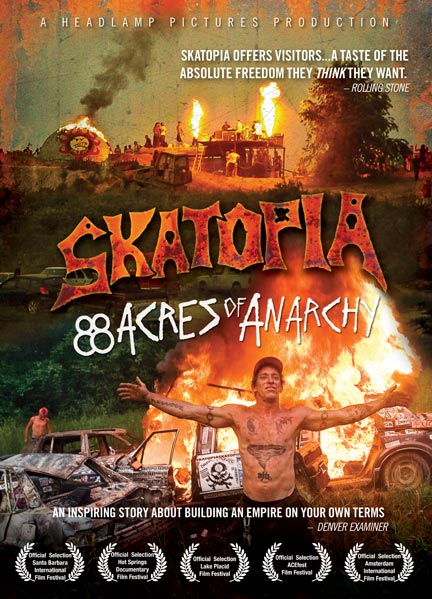
I’ve lamented the loss of Alan Barker’s wonderful site that gave us the technique that worked for our year of shooting at Skatopia. Thank you Alan!

I just remembered the fabulous Wayback Machine at the Internet Archive and REDISCOVERED this lost site.

We don’t agree with his assertion about the DVX100, but we’ve used his mic recommendations for 100’s of hours of verite shooting in extreme conditions.

Check out this great resource from a very accomplished doc sound recordist and producer.

A few other sound resources I’ve used (and each has good used equipment):

Trew Audio: I’ve rented from them and like their reviews and white papers. They gave us a great rate because we were independent, knew what we wanted and treated them (and their gear) professionally.

Professional Sound Services, NYC – not to be confused with PSC that make sound gear… these guys rent gear and make custom cables among other things. Seems like they’ve added training to their mix.

Finally, though audio is not their sole specialty like the others, Talamas Broadcast in Boston is one of the friendliest and most issue free rental houses anwhere. It’s enough to make me think up stories to go shoot in Boston! Also check out their white papers… like how to check Back Focus… if you don’t know what that is and you’ll be shooting professionally, you’d be wise to read this paper.

Enjoy!

How sorry are you that newspapers are dying? Dan Gillmor ain’t.

without comments

I worry about not having a nice inky newspaper to read over Sunday (or any) breakfast, but Gillmor takes aim at the big, greedy side of the media conglomerates. He sees web-based journalism replacing (and maybe doing a better job than) the old model. I wonder, though, if there’s no editor to screen and vet the material and uphold some journalistic standards, how can we have the same trust in the stories? Would Woodward & Bernstein have the same credibility today if they broke the Watergate story on a blog? Food for thought.

Journalism monopoly was also a market failure,

Eroding newspaper business models represent markets that are working, not just failing

More than one speaker at today’s Federal Trade Commission workshop on the future of journalism has used the expression “market failure” to describe the eroding business model of local newspapers. Perhaps they’ve picked up on the FTC’s Federal Register Notice describing the purpose for this months-long initiative, in which economists say that “public affairs reporting may indeed be particularly subject to market failure.”

There’s some truth in this, even though it’s far too early to assume that current trends will lead over the long term to less trustworthy information in the public affairs realm. (I believe the opposite, but the jury’s definitely out on this.) Framing the issue this way also buys into the mythology that we had a Golden Age of Journalism with ample public affairs reporting; even the biggest daily newspapers rarely covered governments outside several core jurisdictions in their markets.

For the privileged few journalists who lived in that era’s once-warm embrace, and especially for their employers, professional life was almost perfect — because that was an era of fabulously profitable monopolies and oligopolies. The public affairs journalism was real, and sometimes brilliant work that made a huge difference in local and national affairs. But relatively speaking to the available financial resources, it was a typically a modest spinoff of near-absolute market power the journalism companies boasted in the communities they claimed to (and sometimes did) serve.

But there’s another way to look at the media marketplace of those days. And from several other perspectives it’s safe to say that current trends amount to the overdue correction: that the pined-after Golden Age was in key ways itself the era of market failure.

If you were a local business that wanted broad reach into the community, you essentially had to pay the extortionate and always-rising display advertisement prices newspapers charged or the equally extortionate broadcast rates local TV affiliates could command. If you were an individual trying to sell a car or household item or rent out a spare room, you paid absurdly high prices for classified ads.ARTICLE CONTINUES…

Written by colin

June 16th, 2010 at 12:33 am

Posted in Uncategorized